Clean Airflow for Engine Performance and Interior Air Quality
Air and Cabin Filter Replacement in Fort Worth for vehicles operating in high-dust environments and heavy traffic conditions
Dust accumulation from construction activity and unpaved surfaces throughout the Dallas-Fort Worth region loads engine air filters faster than typical urban environments, while pollen counts that peak during spring and fall months clog cabin filters and reduce HVAC system airflow. Engine air filter restriction reduces fuel economy and throttle response as the motor compensates for reduced oxygen intake, and cabin filter blockage forces climate control systems to work harder while circulating unfiltered particulates through interior vents. The Brake Guyz DFW replaces both filter types with OEM-equivalent parts during routine service intervals, addressing the maintenance need efficiently while vehicles receive other scheduled work.
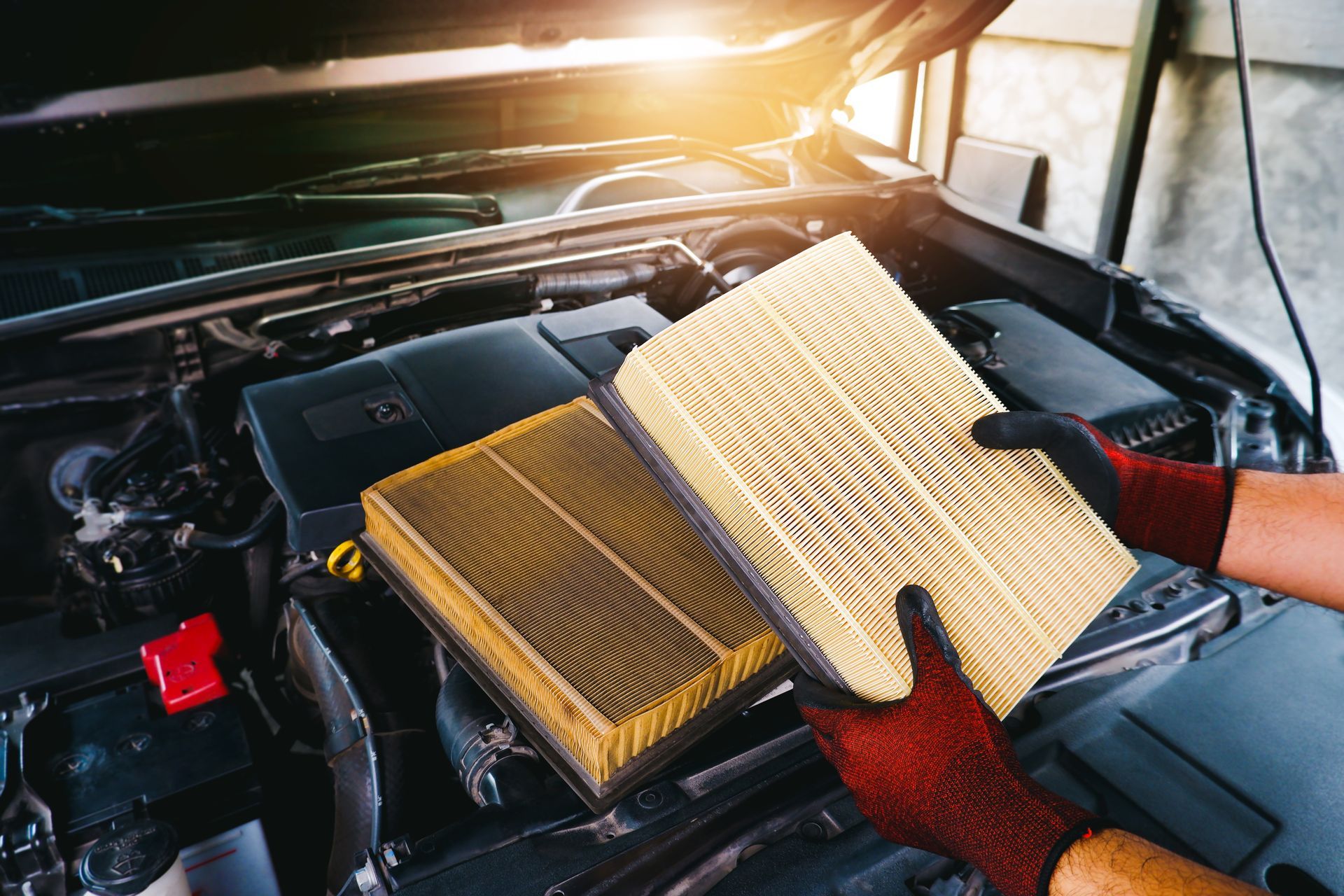
Air filter replacement involves removing the filter housing cover, extracting the contaminated element, cleaning debris from the housing interior, and installing a new filter that matches original equipment specifications for filtration efficiency and airflow capacity. Cabin filter service requires accessing the filter housing behind the glove box or under the dashboard, depending on vehicle design, and replacing the pleated media element that traps dust and pollen before air enters the passenger compartment.
Request filter inspection during your next service appointment to determine whether replacement improves engine performance or cabin air quality.
What Changes After Filter Service Completes
Visual inspection reveals whether filter media shows gray discoloration from dust loading or black residue from oil contamination, while measuring airflow restriction with specialized gauges determines whether blockage affects performance. Traffic congestion along Interstate 30 and Interstate 35W corridors increases idle time when engines draw air through already-restricted filters, compounding the efficiency loss caused by reduced oxygen availability during acceleration.
After air filter replacement, acceleration feels more responsive during highway merging and fuel economy often improves by one to two miles per gallon as the engine receives unrestricted airflow for proper combustion. Cabin filter replacement restores full HVAC fan speed at lower blower settings and eliminates musty odors that develop when moisture traps organic material in saturated filter media, making climate control noticeably more effective at maintaining set temperature.
Replacement intervals depend on driving conditions rather than just mileage, with vehicles operating on unpaved roads or in agricultural areas requiring filter changes every ten thousand miles compared to fifteen thousand mile intervals for primarily highway driving. Some performance air filters use oiled cotton media that requires periodic cleaning instead of replacement, though these designs need different maintenance procedures than standard paper element filters.
Common Questions About This Service
Drivers considering filter replacement or trying to determine service timing typically want to understand what the work involves and how filters affect vehicle operation.
How do I know when my air filter needs replacement?
Visible dust accumulation that blocks more than half the filter pleats indicates replacement time, though restricted airflow and reduced fuel economy often appear before the filter looks completely saturated.
What happens if I wait too long to replace the cabin filter?
Severely clogged cabin filters force HVAC blowers to work harder and reduce air volume from dashboard vents, while trapped moisture promotes mold growth that creates persistent odors even after eventual filter replacement.
Can dirty air filters actually damage my engine?
Contaminated filters that develop tears or gaps allow unfiltered air carrying abrasive particles into the intake system, where dust causes premature wear on cylinder walls and piston rings over extended operation.
Why do filters get dirty faster in Fort Worth than other cities?
Construction activity throughout expanding suburban areas generates airborne dust, while low humidity allows fine particles to remain suspended longer and agricultural operations in surrounding counties contribute seasonal pollen loads that accelerate filter saturation.
Should I upgrade to premium filters or stick with standard replacements?
Standard paper element filters meeting OEM specifications provide adequate protection for most driving conditions, while high-flow performance filters benefit modified engines and washable designs suit drivers willing to maintain reusable elements.
The Brake Guyz DFW includes filter inspection as part of comprehensive service visits and recommends replacement based on actual condition rather than predetermined schedules. Book a maintenance appointment to evaluate both engine and cabin filter status based on your specific driving environment.